
Needham Previous Residents by Era
A Needham address history works best as an era-by-era chronology. Norfolk deeds establish the Needham legal-instrument trail. Needham directories, annual reports, and census sources can add a dated household clue. Needham building records can explain later work at the site, but no one source identifies every person who lived there. The table separates what each source can support from what it cannot.
| Source | Years it covers | Where held | What it can show |
|---|---|---|---|
| Needham recorded-land index | 1793 forward | Norfolk Registry of Deeds | Needham instruments, parties, plans, and legal-property references. |
| Needham Land Court records | 1900 forward | Norfolk Registry system | Certificates and encumbrances in a separate Needham registered-land workflow. |
| Selected Needham directories | 1883–1938, with gaps | State Library; LOC volume for 1888–89 | Dated name, address, firm, and household clues as printed. |
| Annual reports and voting lists | 1891–2024 reports; selected voting-list years | Needham Library and State Library | Time-specific civic or local context, subject to access limits. |
| Building permits | March 18, 2020 forward online | Needham Building Department / ViewPoint route | Address-keyed project and status evidence where public. |
The federal census becomes public under its 72-year rule and should be paired with the appropriate Needham locality and source date. It is a Needham household source for its census date, not a continuous address history.
Build a Needham Previous Residents Timeline
Start with the current Needham fiscal-year card in Needham’s assessor portal. Save the Needham situs address, assessed owner, mailing address, parcel or account identifier, assessment year, sales information, and any deed reference that is actually shown. The Needham assessor display is a dated administrative record. Its owner and mailing fields should not be rewritten as a present-occupant statement.
Next, check the same Needham location in Needham WebGIS. Needham parcel geometry, layers, and map labels can help distinguish nearby lots. The town warns that map data can be incomplete, inaccurate, or out of date, so retain the Needham map date and use a Registry plan or deed where the legal boundary matters.
For a dated Needham previous-residents timeline, describe each result by record type. An assessor card is a fiscal display, a deed is an instrument, and a directory is a historical publication. Keeping those labels prevents a later reader from treating one source as proof of everything.
Note: Keep a row for every source date, rather than merging an assessed owner, a deed party, and a historical listing into one person record.
Needham Previous Residents and Old Labels
Older Needham instruments and directories can refer to a farm, lot, abutter, corner, village, or road form instead of a familiar modern address. Needham Center, Great Plain Village, Upper Falls, and Needham Heights carry different historical associations. The 1853 Needham rail connection and later growth around Great Plain can also help explain why an older Needham street or business reference does not resemble today’s map pattern.
No authoritative Needham street-renumbering schedule or complete reverse-directory series was found. That is a useful stopping point. Compare the printed Needham address with a historical map, the legal description, a plan, and a Needham assessor parcel only when the evidence supports the bridge.
Trace Needham Previous Residents Through Deeds
The Norfolk Research deed index carries Needham recorded land records and images from 1793 forward. For older Needham work, it is chiefly a party-name, plan, book, and page search because address fields are limited before about 2003. Compare the Needham property description and prior-reference language in each plausible instrument. A Needham Registry search is not a completed title examination.
The Registry’s grantor-grantee search is the starting point shown here for Needham previous-residents research.
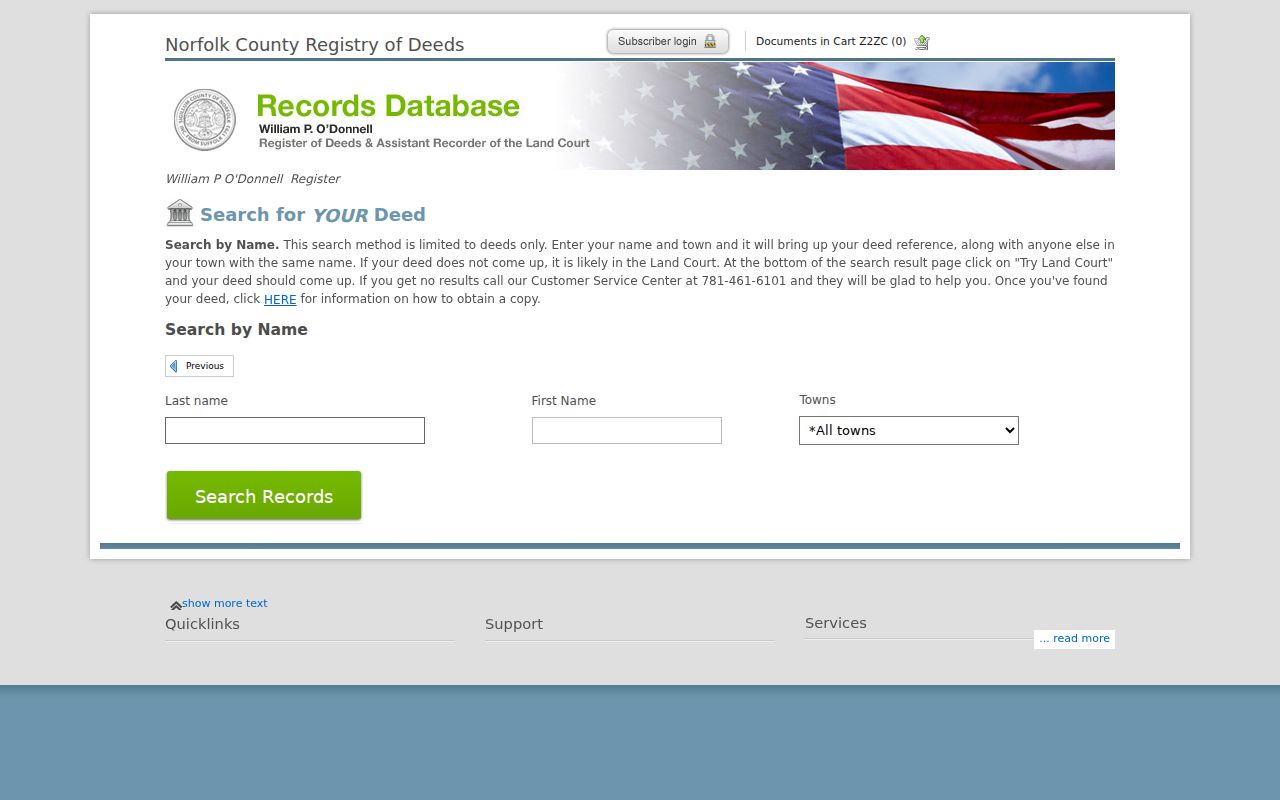
The index helps find a dated Needham transaction. It does not show who occupied the Needham property, and a recorded transfer can involve a trust, partial interest, mortgage, easement, probate instrument, or other event rather than a sale.
- Use the Needham assessor card to identify the current Needham parcel and assessed owner.
- Search that owner as a grantee, with Needham as the town where relevant.
- Open the likely Needham purchase instrument and compare its legal description, plan, parties, date, consideration, and prior deed reference.
- Search the seller as a grantee to locate that party’s own acquisition, then repeat one transaction at a time.
- When the Needham address disappears, switch to names, abutters, plans, book/page, or legal description, and mark ambiguity rather than forcing a link.
- Grantor
- The party conveying an interest in the recorded instrument.
- Grantee
- The party receiving the interest recorded in that instrument.
- Chain of title
- A sequence of property instruments, not a promise of complete title status.
- Legal description
- The lot, plan, bounds, or other property wording that can outlast a street-address change.
Read Needham Previous Residents in Directories
The Library of Congress digitized History and directory of Needham, Massachusetts for 1888–89, a volume with Needham resident, street, business, and town-officer material. Its OCR is a Needham discovery aid. Page images control when a name, Needham street, abbreviation, or corner notation is unclear. Entries can include a name, business or firm reference, Needham home street, and marks such as h for home, b for boarding, and cor for a corner.
The searchable directory OCR is shown here as a route into the 1888–89 Needham directory.
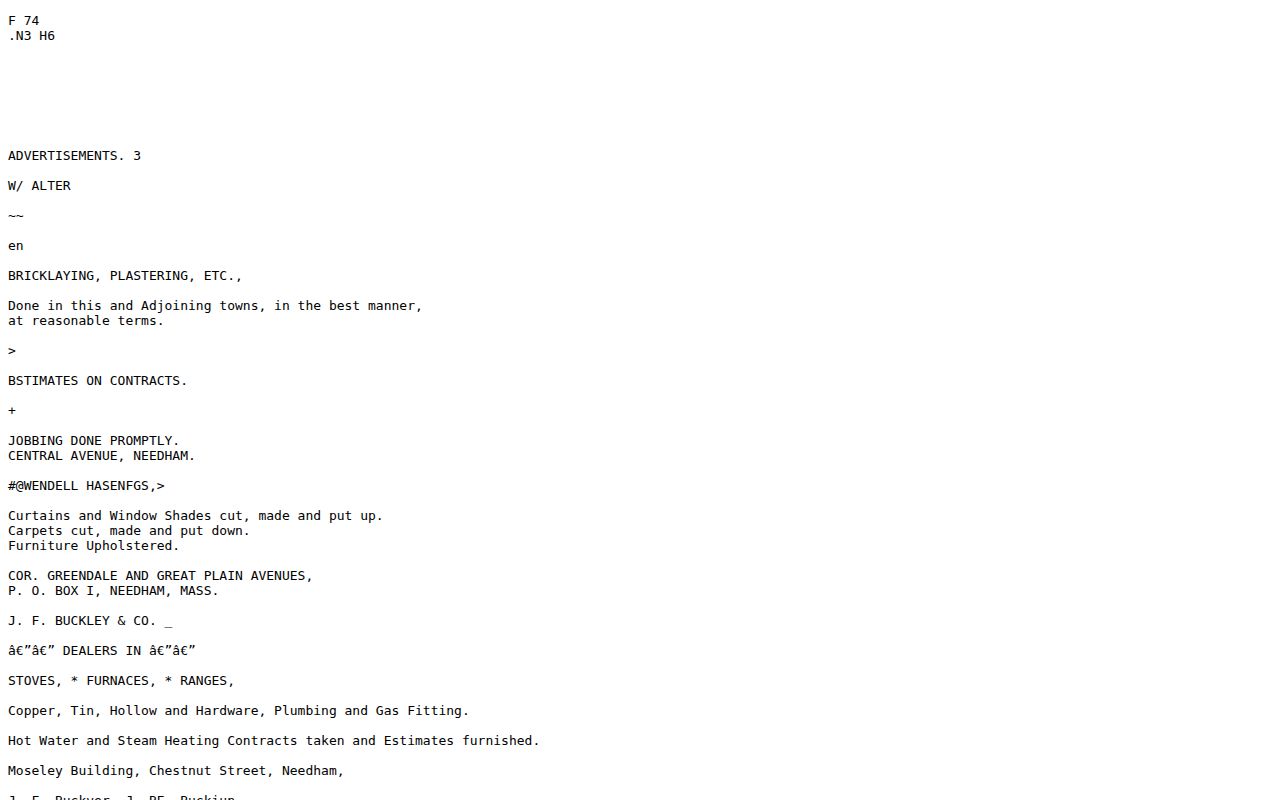
A historical Needham entry is a statement about the publication’s period. It does not establish a Needham owner, every household member, or a current location. Preserve the entry’s original Needham spelling and village code in the research record.
Note: Use OCR to discover a possible entry, then transcribe names and address abbreviations from the page image itself.
Needham Previous Residents in Census
To test a possible Needham household connection, compare two or more Needham directory years without flattening their wording. Pair a directory year with the available federal census period, then check selected Needham voting-list holdings, Needham annual reports, obituaries, probate, or vital records where access rules permit. The historical volumes themselves are described on the Needham directory collection page.
- Transcribe the historical Needham directory entry as printed, including initials, street form, village code, and date.
- Check the next available Needham directory or annual source for a repeated address or changed household wording.
- Pair the period with a public census year and record what the census actually says for that date.
- Use a deed, probate record, obituary, or vital source only to answer its own dated question.
Common Needham surnames and initials need at least two independent corroborators, such as a Needham street plus a time-matched deed, or a directory address plus a printed relationship or firm reference. A shared Needham ZIP or surname alone is not enough.
Federal census access follows the 72-year rule, while Needham voting-list holdings exist only for selected years. These sources can bridge gaps in a previous-residents chronology, but availability and public fields vary. Cite the actual volume, page, date, and custodian for each finding.
Needham Library House-History Access
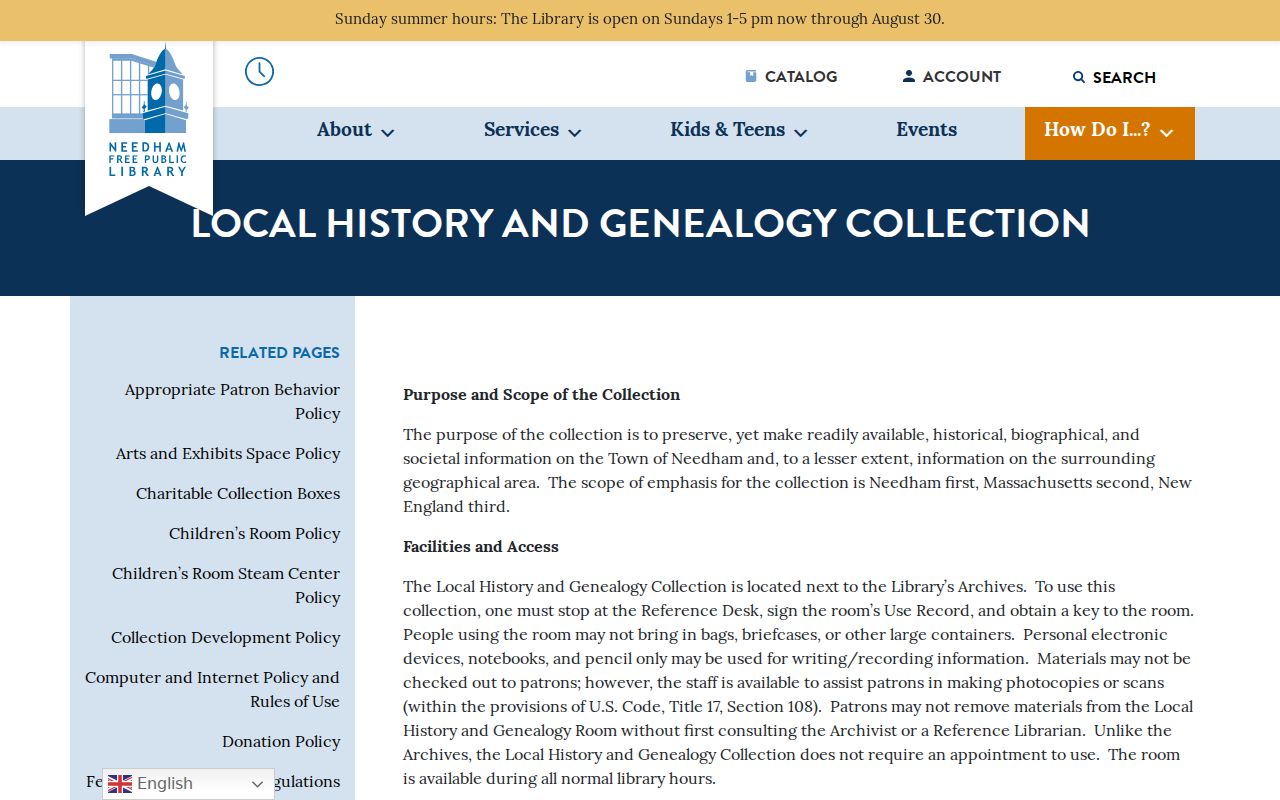
The Needham Genealogy and Local History Room is the local fallback when a volume is not online. It holds physical Needham material that does not circulate. Researchers check in at the reference desk, sign the Use Record, and use the room under the collection policy. Staff can help identify material; the library directs questions to Danielle Tawa at 781-455-7559.
The local-history collection policy is shown here for the Needham previous-residents research route.
Annual reports, yearbooks, Digital Commonwealth house material, Heritage Hub notices, and in-library databases can supply context. The Needham History Center also accepts research appointments for local archives and historic-place material.
Needham Permit Dates in a House Trail
Building permits are the clearest current address-keyed town route, with online coverage for permits issued from March 18, 2020 forward. A permit may identify a project, application, issue or final date, inspection, plan, or condition when publicly released. It can date work on a property but cannot establish a transfer of ownership or identify everyone at the address.
For an older building, Sanborn sheets from 1896 and 1901 can add a building-footprint or land-use clue. The research did not capture exact item permalinks, so they should be located through the relevant institutional catalog before being cited for a specific site.
Note: A permit can date publicly documented work, but it cannot by itself date a sale, establish occupancy, or complete a chain.
Needham Previous Residents, Privacy, and Limits
A public deed, directory, census line, or map does not erase confidentiality rules. Do not republish full dates of birth, account numbers, phone or email details, protected addresses, or minor information. Court seals, confidential-voter status, vital-record restrictions, and the Massachusetts Address Confidentiality Program remain in force. A record’s age and public availability do not turn it into a current profile.
Use the minimum fact needed for the historical question, identify the source and date, and distinguish a printed listing from a verified present status. A lack of a public result is not proof that a person was absent or that a protected record does not exist.
If a public record needs clarification, ask the responsible custodian for the specific document or public field. Needham’s Public Records route accepts narrow written requests and can provide an estimate or explain redaction, rather than inviting a broad person-wide request.
Lawful use. Needham house-history research can support family history, estate questions, and local history. It must never be used to harass, surveil, or expose a living person.